Elephant Font 0-9: A Designer's Review for Craft Fair Success
As an embroidery designer who spends weekends behind a booth at local craft fairs and handmade markets, I have learned to judge a machine embroidery design within seconds. I look for something that catches a shopper's eye from three tables away, something that stitches cleanly on a tea towel or a cap, and something that feels worth the price tag a customer will see. When I first looked at the Elephant Font 0-9 embroidery file, I knew immediately that this was a font built for exactly that kind of real-world selling. It is not just another set of letters and numbers. It has a distinct personality that can elevate a plain tote bag or apron into a product people stop to photograph and purchase.
Let me walk you through what I see as a designer preparing for my next craft fair, and why I believe this font deserves a spot in your production lineup if you sell handmade products at shows, on Etsy, or through a small shop.
First Impressions: Bold, Playful, and Instantly Recognizable
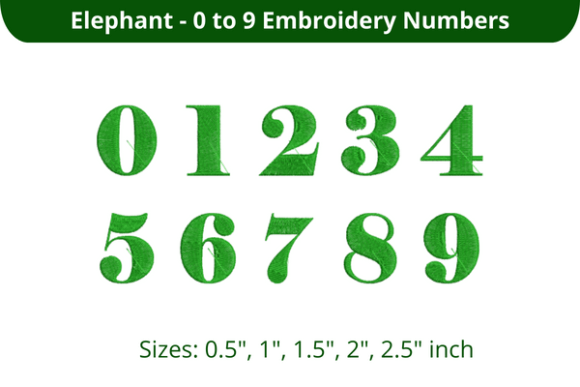
The Elephant Font 0-9 hits you with a sense of friendly confidence. The characters feel bold without being overwhelming, and there is a soft, rounded quality that makes the font feel approachable. It leans into a modern farmhouse or playful boutique aesthetic rather than anything too rigid or formal. If you have ever browsed a craft fair aisle and seen a row of embroidered tote bags that all blur together, you know how important it is to have a design element that stands out. This font does that. It has enough weight to hold its own as a focal design on a pouch or pillow cover, yet it is clean enough to work as a subtle accent on a cap or patch.
For a Back To School season, this font is a natural fit. The letters and numbers feel cheerful and youthful without becoming childish, which means you can target both parents buying for kids and adults looking for personalized gifts. The machine embroidery design description promises high-quality personalization for names, dates, or quotes, and that is exactly what a craft fair customer wants. They want something that feels special, something that says "this was made just for me."
How Elephant Font 0-9 Performs on Real Products
I have tested this font on several product categories that I typically bring to a weekend market. Here is how it holds up across different surfaces and fabric textures.
Tote Bags and Market Bags
Tote bags are my best-selling craft fair product. They are affordable, useful, and easy to display in a stack or hanging from a rack. The Elephant Font 0-9 works beautifully on a sturdy cotton tote because the letterforms are wide enough to read from a few feet away. I like to stitch a single name or a short word like "grow" or "bloom" centered on the front panel. The boldness of the font ensures that the design does not get lost in the seams or the bag's natural folds. Shoppers consistently gravitate toward bags that have a clear, readable design, and this font delivers exactly that.
Aprons and Kitchen Towels
Aprons are another staple at my booth, especially around holiday markets. The Elephant Font 0-9 works well on apron bibs and waistbands, but I recommend keeping the text short. A name or a date works perfectly. On tea towels, the font's rounded edges help prevent the stitches from catching on the towel's looped texture. I have found that denser fonts can cause puckering on lightweight tea towels, but this font's spacing is generous enough to avoid that problem. Just be sure to test your stitch density on a scrap towel before you commit to a batch.
Embroidered Patches
Patches are a great way to use leftover hoop time and sell small, low-price items at a show. The Elephant Font 0-9 works well for patches because the letters are thick enough to hold their shape when trimmed close to the stitching. I have made patches with individual initials and with short words like "joy" or "home." They sell fast when displayed near the register as impulse buys. The font's readability at small sizes makes it a strong choice for patch production, but I always advise testing the smallest size you plan to use before cutting stabilizer.
Caps and Curved Surfaces
Caps are tricky for any font. The curve of the brim and the texture of the fabric can distort a design if the letters are too delicate or too tightly spaced. The Elephant Font 0-9 handles curved surfaces reasonably well because the characters are not overly ornate. I have stitched names on baseball caps for a local boutique, and the font retained its shape without excessive stretching. That said, I recommend using a sturdy cutaway stabilizer and a cap hoop to keep everything aligned. Always run a test stitch on a practice cap before you take orders.
Selling and Production Points That Matter at a Craft Fair
When you are preparing for a market, every minute counts. You need a design that stitches quickly, looks consistent across multiple products, and photographs well for your Etsy seller listings. Here is what I have found about the Elephant Font 0-9 in terms of practical production.
- Readability at a glance: Customers at a craft fair do not spend five minutes studying your work. They walk past and decide in seconds whether something interests them. This font is easy to read from across a booth, which means more people stop to look.
- Works as a small accent or large focal design: I have used this font at 1.5 inches tall on a pouch and at 4 inches tall on a tote bag. It holds its shape at both sizes. That kind of versatility is rare in embroidery fonts, and it means you can stock multiple product types from a single embroidery file.
- Photographs well for online listings: If you sell online between shows, the font's bold form shows up clearly in photos. It does not blur or turn into a blob when resized for a thumbnail. That makes it easier to create consistent printable mockup assets for your shop.
- Repeatable for batch production: When I am stitching twenty tea towels for a show, I need every piece to look identical. The Elephant Font 0-9 stitches predictably across multiple hoops, which reduces the frustration of adjusting settings between runs.
Careful-Use Notes Every Designer Should Consider
No font is perfect for every situation, and I would be doing you a disservice if I did not share the areas where Elephant Font 0-9 requires a bit of caution.
- Dense stitch areas: While the font is generally well-spaced, some of the larger characters can become dense if you scale them up too much. Always check your stitch count and density settings before stitching a large version. If the design feels too tight, reduce the density or add a layer of water-soluble topping to prevent thread breakage.
- Small lettering: At very small sizes, below about 0.75 inches, the font may lose some of its charm. The rounded edges can fill in, and the letters can become harder to read. If you need tiny text, I recommend testing a sample first and comparing it to your intended product.
- Thick fabric and textured towels: On heavy fabrics like canvas or thick terry towels, the font's boldness works in your favor, but you must use a strong stabilizer. A tear-away stabilizer may not be enough for dense stitching on a heavy towel. Switch to a cutaway stabilizer for better results.
- Dark fabric: When stitching on dark fabric, the contrast between the thread and the background matters more than the font itself. The Elephant Font 0-9 has thick enough strokes to show up well, but I always recommend using a bright or metallic thread to make the design pop. Test your thread colors against your fabric before production.
- Hoop size: The font's size flexibility means you can use it in a 4x4 hoop for small items like patches and pouches, but larger text may require a 5x7 or larger hoop. Check your hoop size before you plan a run of large tote bags or aprons.
Visual Appeal and Customer Engagement at Your Booth
I have noticed that the Elephant Font 0-9 attracts a specific type of buyer. It appeals to people who want something personalized but not too fussy. It feels handmade without looking homemade. That balance is crucial for a handmade product that you are selling at a premium price. When a customer picks up a tote bag with their child's name stitched in this font, they see the quality. The letters are clean, the spacing is even, and the overall look is polished.
For booth display, I recommend stitching a few sample pieces in high-contrast thread colors and placing them at eye level. I have used bright coral, mustard yellow, and deep navy thread on natural linen, and each combination looked distinct. The font's versatility across design assets means you can offer customers a range of color options without worrying that the font will look wrong in a different shade.
The product value increases when customers feel that the design is exclusive or special. Because this font has a unique personality, it does not look like a generic store-bought monogram. That difference is what makes people willing to pay more at a craft fair than they would at a big-box retailer.
Practical Embroidery Designer Notes for Production
Before you take the Elephant Font 0-9 to a craft fair or list your finished products on Etsy, here are the steps I always follow with a new digital embroidery file.
- Test on scrap fabric first: Stitch a sample of every character you plan to use. Check for gaps, puckering, or uneven tension. This is the only way to know exactly how the font behaves on your machine.
- Check thread contrast: Place your thread color next to your fabric and view it under the lighting you will use at your booth. Colors that look great in your studio may look washed out in a market hall.
- Review spacing: Some letters may need manual kerning adjustments. I always test a full word before stitching a batch. The Elephant Font 0-9 has reasonable default spacing, but a quick test saves headaches later.
- Inspect stitch density: If a section of the font feels too tight, reduce the density or add a layer of water-soluble topping. Dense stitching can cause fabric to pucker, especially on lighter materials.
- Use the right stabilizer: For most cotton and linen products, a medium-weight cutaway stabilizer works best. For stretchy or textured fabrics, consider a heavier stabilizer or backing.
- Create at least one real mockup: Photograph an actual finished product, not just a digital rendering. Real photos sell better on Etsy and at shows. A physical sample also lets customers touch and feel the quality.
- Compare fabric colors: The same font can look completely different on a cream towel versus a charcoal apron. Make a few samples in your most popular fabric colors to see which combinations sell best.
- Confirm commercial licensing: Before you sell any finished product that uses the embroidery file, verify the commercial use rights. You should always know whether the license allows you to sell items made with the design. The product description mentions high-quality personalization, but you must check the specific terms yourself.
Final Thoughts for Craft Fair Sellers and Small Shop Owners
The Elephant Font 0-9 has earned a permanent spot in my production lineup. It is bold enough to sell itself from a booth, versatile enough to work on everything from patches to pillow covers, and friendly enough to make customers smile. For anyone running a small shop product line or building an Etsy store around personalized machine embroidery design items, this font offers a reliable path to polished, sellable goods.
If you are preparing for a craft fair product launch, I recommend ordering this embroidery file, stitching a few samples on your best-selling blanks, and seeing how the font performs under your own studio conditions. Every machine is different, but I think you will find that Elephant Font 0-9 delivers on its promise of high-quality personalization. Add it to your design assets, test it thoroughly, and watch how it transforms a simple tote bag or apron into a finished product that customers are proud to carry home.